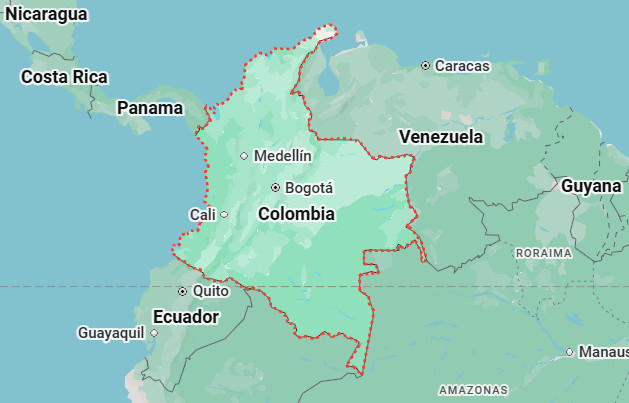
I am falling in love with the city of Medellin! This is probably one of the best weeks I have had in my entire backpacking journey, in terms of soaking in fascinating stories and having unique experience.
Medellin has undergone a dramatic face-lift in the past two decades, going from the world’s most dangerous city in the 1990s to one of the most innovative cities in 2017. When people think of Medellin, the first thing that come to their mind is always the same: Pablo Escobar.
Pablo Escobar, the most notorious Colombian drug lord. He was often called “The King of Cocaine” and was the wealthiest criminal in history. His Medellin Cartel controlled 80% of the global cocaine market at the height of his career, turning over US $22 billion / year in personal income (equivalent to $56 billion / year in today’s money), making him one of the world’s wealthiest men in his prime.
In the 1960s, Escobar began to engage in criminal activities like selling contraband cigarettes, fake lottery tickets, and stealing cars; in the 1970s, he began to smuggle powder cocaine into the US, resulting in massacres and the murders of police officers, judges, locals, and prominent politicians; Because of Escobar, Colombia became the murder capital of the world – The increased murder rate was fueled by Escobar’s giving money to his hitmen as a reward for killing police officers; in 1989, Escobar bombed an Avianca passenger flight (flying from Bogota to Cali), killing 110 people and hoping it would kill presidential candidate Gaviria Trujillo. Gaviria, however, was not on the aircraft and went on to become President of Colombia.
While seen as an enemy of the US and Colombian governments, Escobar was a hero to many in Medellin – Especially the poor people. He constructed houses and football fields in western Colombia, which gained him popularity among the poor. He worked hard to cultivate his Robin Hood image, and frequently distributed money through housing projects and other civic activities; in 1993, Escobar was shot and killed in Medellin by Colombian National Police, one day after his 44th birthday.
Learning about Pablo Escobar from the locals (rather than learning from the Netflix series), witnessing the transformation of Medellin / Comuna 13, and experiencing new things at Selina have definitely been the highlight of Colombia so far – Coming up: Bogota and Cali.
#Colombia

In 2002, 10 years after Escobar’s death, a pivotal event happened in Comuna 13: The Colombian military carried out a strike to overthrow all rebel groups in the neighborhood. Over 1000 policemen, soldiers, and aircrew in helicopters attacked the area (comprising of roughly 100,000 inhabitants). 9 people were killed (3 children) and hundreds were wounded. Although the inhabitants were furious about the strike, as time goes by many realize that the event has brought positive changes to them by cleaning up the community.
@Medellin

I don’t usually buy souvenirs (my small backpack doesn’t allow me to). But it is fascinating to see the transformation of Comina 13 in the past decade, going from the center of armed conflicts to where they are now – And so I picked up this book (from a vendor inside Comuna 13). Will probably finish this book in a week before I leave Colombia and will share my thoughts.
@Medellin

In 2002, 10 years after Escobar’s death, a pivotal event happened in Comuna 13: The Colombian military carried out a strike to overthrow all rebel groups in the neighborhood. Over 1000 policemen, soldiers, and aircrew in helicopters attacked the area (comprising of roughly 100,000 inhabitants). 9 people were killed (3 children) and hundreds were wounded. Although the inhabitants were furious about the strike, as time goes by many realize that the event has brought positive changes to them by cleaning up the community.
@Medellin

@Medellin

I don’t usually buy souvenirs (my small backpack doesn’t allow me to). But it is fascinating to see the transformation of Comina 13 in the past decade, going from the center of armed conflicts to where they are now – And so I picked up this book (from a vendor inside Comuna 13). Will probably finish this book in a week before I leave Colombia and will share my thoughts.
@Medellin

Our walking tour guide, who has been doing the tour for quite sometime now, mentioned that 80% of the tourists visiting Colombia are from the Netherlands. The Dutch definitely love Colombia!
@Medellin

When asked why he always paints fat people, Botero responded, “If I portray a fruit, a landscape, an animal, a man, or anything, deformity is always present to enhance the volume. In which case I don’t see them as fat but with volume.”
@Medellin

When asked why he always paints fat people, Botero responded, “If I portray a fruit, a landscape, an animal, a man, or anything, deformity is always present to enhance the volume. In which case I don’t see them as fat but with volume.”
@Medellin

When asked why he always paints fat people, Botero responded, “If I portray a fruit, a landscape, an animal, a man, or anything, deformity is always present to enhance the volume. In which case I don’t see them as fat but with volume.”
@Medellin

When asked why he always paints fat people, Botero responded, “If I portray a fruit, a landscape, an animal, a man, or anything, deformity is always present to enhance the volume. In which case I don’t see them as fat but with volume.”
@Medellin

When asked why he always paints fat people, Botero responded, “If I portray a fruit, a landscape, an animal, a man, or anything, deformity is always present to enhance the volume. In which case I don’t see them as fat but with volume.”
@Medellin

@Medellin

@Medellin

@Medellin

@Medellin

@Medellin

@Medellin

@Medellin

@Medellin

The reasons for fighting vary from group to group: The government claims to be fighting for order and stability. The left and the right claim to be fighting for the rights of the poor, while both have been accused of engaging in drug trafficking and terrorism.
After the Colombian Government dismantled Escobar’s drug cartel, the left and the right resumed some of the drug-trafficking activities. They also resorted to kidnapping for funding new weapons to attack military and civilian targets. In 2000, left-wing terrorist groups like the Revolutionary Armed Forces of Colombia (FARC) and the National Liberation Army (ELN) set up roadblocks on major highways to kidnap travelers. As my Medellin tour guide said, her family and other families in Medellin were afraid of travelling anywhere more than a couple of hours away due to the risk of kidnapping.
In 2016, President Juan Manuel Santos was awarded the Nobel Peace Prize for his efforts to bring the country’s more than 50-year-long civil war to an end, as he signed a historic ceasefire deal with the left-wing terrorist groups FARC and ELN.
@Medellin

The prison was built to specifications ordered by Escobar, under a 1991 agreement with the Colombian government in which Escobar would surrender to authorities and serve a maximum term of 5 full years, and the Colombian government would not extradite him to the US; Escobar was also given the right to choose who would guard him, and it was believed he chose guards loyal only to him – The prison was believed to have been designed more to keep out Escobar’s enemies and protect him from assassination attempts, than to keep Escobar in. The finished prison was often called “Hotel Escobar” because of its amenities: The prison featured a soccer field, giant doll house, bar, jacuzzi, and waterfall.
Although the Colombian government was willing to turn a blind eye to Escobar continuing his drug smuggling, the arrangement fell apart when it was reported Escobar had 4 of his lieutenants murdered within the prison. The Colombian government decided it had to move Escobar to a standard prison, an order Escobar refused. In 1992, after serving 1 year and 1 month, Escobar again went on the run. Although the Colombian National Army surrounded the prison, it is said Escobar simply walked out the back gate. This led to a manhunt that employed a 600-man unit force, specially trained by the US Delta Force, named Search Bloc. Escobar was shot and killed in 1993 by the Colombian National Police.
@Medellin

@Medellin

@Medellin

@Medellin

@Medellin

@Medellin

@Medellin

@Medellin

@Medellin

I am yet to do a coffee farm tour here in Colombia (arranging for a tour is more difficult than I thought, as they only do group tours). But I learned that there are two main types of coffee beans: Arabica and Robusta. Arabica beans (gourmet coffee) are the higher quality beans and represent most of the coffee sold in the world today. They are grown best in warm and humid climates at high elevations; Robusta beans are the lower quality beans (instant coffee). They are grown at lower elevations and are more “robust” / resilient to climate changes.
In Colombia, Central cordilleras mountain ranges around the cities of Medellin, Armenia, and Manizales are noted as MAM to the coffee world, with Medellin producing coffee with heavy body, rich flavor, and balanced acidity.
@Medellin

@Medellin

@Medellin

@Medellin

@Medellin

@Medellin

A travel alert doesn’t mean that the entire country is dangerous and that you should not travel there. It is simply telling you to be more cautious; a travel warning, on the other hand, is more substantial and should be treated more seriously.
@Medellin

Fernando Botero is a Colombian artist and is considered the most recognized living artist in Latin America. Born in Medellin, his signature style depicts people and figures in large, exaggerated volume, which can represent political criticism or humor. His art can be found in highly visible places around the world, such as Park Avenue in New York City and the Champs-Elysees in Paris.
When asked why he always paints fat people, Botero responded, “If I portray a fruit, a landscape, an animal, a man, or anything, deformity is always present to enhance the volume. In which case I don’t see them as fat but with volume.”
@Bogota

The Sergeant was pleasantly surprised that I knew about the military uniform change in 2006 (from tropical camouflage to digital camouflage) – I told him that my ex’s family was in the military and that was how I learned about it.
@Bogota

@Bogota

@Bogota

@Bogota

1. What caused the armed conflict in Comuna 13?
2. Who was fighting who?
3. How was it like living in Comuna 13 during the conflict?
I gave myself a week to read this book, but I ended up finishing it in a single day during my last day in Medellin. Below is what I think are the answers to the three questions (based on what I read from the book and comments from various people – Local guides, Sergeant at the Military Museum, etc.):
1. What caused the armed conflict in Comuna 13?
Leftist politician Jorge Gaitan was assassinated in 1948 during his presidential campaign. The leftist thought that the rightist plotted the assassination, which led to the formation of leftist guerrillas like the Revolutionary Armed Forces of Colombia (FARC) and the National Liberation Army (ELN) in the 1960s. FARC and ELN started out with the goal of protecting the rights of the poor. But with money (from smuggling drugs) and power (from conquering territories), they slowly lost their ideology and became terriorist groups. To fight FARC and ELN, some rightist paramilitary groups were formed in the 1990s, but they later also became terrorist groups because of similar reason (money + power). Many of these conflicts happened in Comuna 13 because of its strategic location. Although the situation has stablized a lot in the past decade, this is still an ongoing issue especially with the ELN, which the government continues to negotiate ceasefire with.
2. Who was fighting who?
The extreme left (FARC, ELN, etc.), the extreme right (paramiltary groups), the government, and drug dealers.
This is not as simple as “good guys fighting bad guys”, as the bad guys started out good and good guys sometimes do bad things.
3. How was it like living in Comuna 13 during the conflict?
The book talks about this in great details. During the period of 1960-2010, people in Comuna 13 pretty much lived their lives dodging bullets everyday: Shooting, kidnapping, car bombs, corpse bombs, and various other crimes.
@Medellin

@Bogota

@Cali

@Cali

@Cali